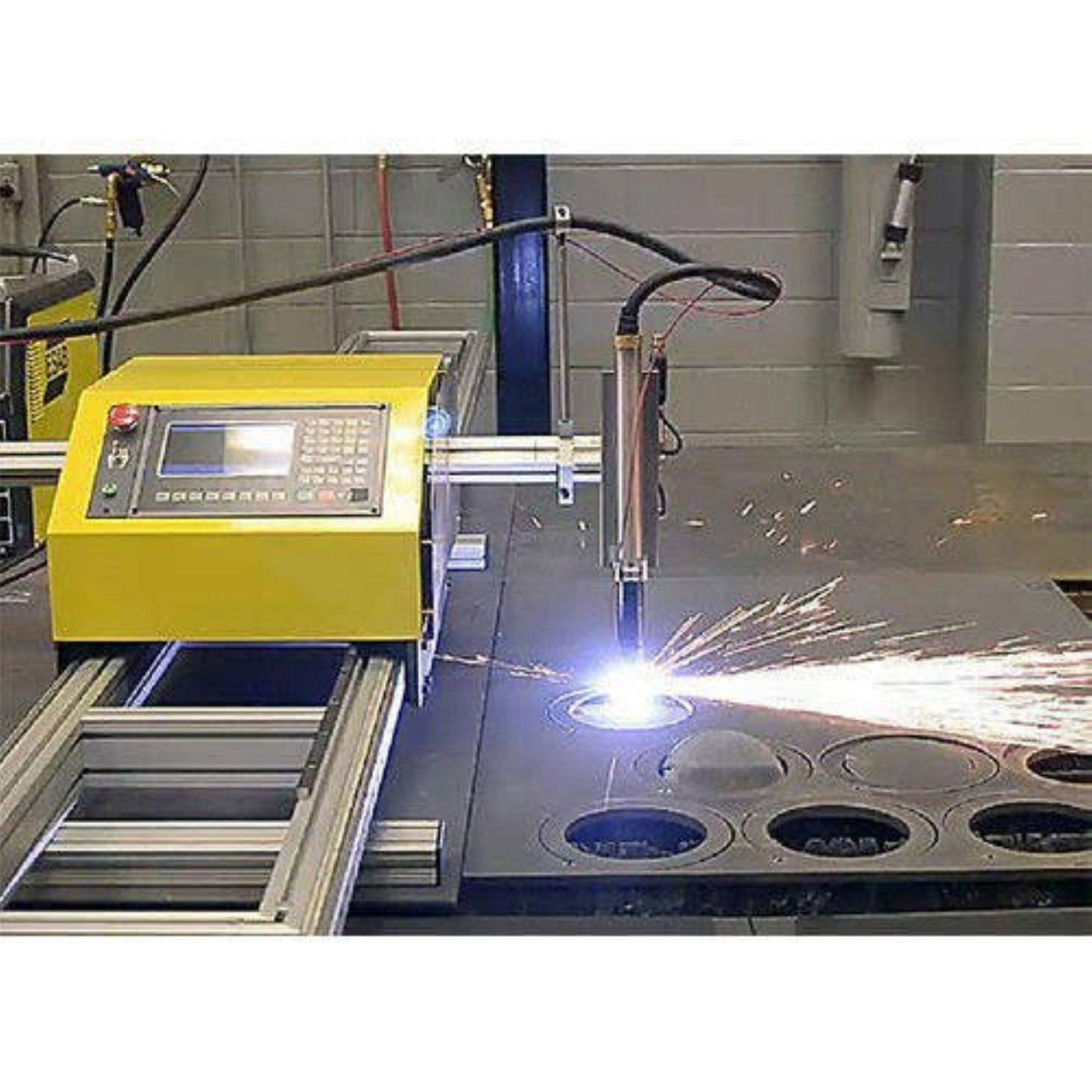
Accurate metal fabrication depends on more than a clean cut. Finished components must match design specifications closely enough to fit, weld, bolt, and function without unnecessary adjustments. A CNC plasma cutter delivers dependable precision by combining computer-guided motion, controlled cutting parameters, and quality equipment, making it a practical solution for industries that value consistent fabrication results.
Standard Mechanical Positioning Accuracy of ±0.005 to ±0.015 Inches
Mechanical positioning accuracy describes how precisely the machine moves the torch to the programmed location before the cut begins. Modern CNC plasma cutter systems commonly achieve positioning accuracy between ±0.005 and ±0.015 inches, allowing repeated movement to exact coordinates across the cutting table. This level of control gives manufacturers confidence that each programmed path starts where it should.
Reliable positioning becomes especially valuable during production runs involving hundreds of identical components. Consistent motion reduces variation from part to part while improving hole placement, slot alignment, and profile accuracy. Shops researching CNC companies near me often compare positioning specifications because machine movement directly affects long-term production quality.
Typical Finished Part Cut Tolerances of ±0.020 to ±0.030 Inches
Finished part tolerance reflects the completed dimensions after material has been cut rather than simply where the machine travels. Under proper operating conditions, a CNC plasma cutting machine typically produces parts within ±0.020 to ±0.030 inches, making it suitable for structural fabrication, machinery components, brackets, support frames, and industrial assemblies.
Actual results depend on several working conditions beyond the equipment itself. Material quality, operator programming, plate thickness, torch condition, and cutting speed all influence dimensional consistency. Well-maintained systems regularly stay within these ranges while reducing the amount of secondary grinding or fitting required before assembly.
High-Definition Plasma System Tolerance Capabilities Down to ±0.010 Inches
High-definition plasma technology improves edge quality by creating a narrower, more focused arc than conventional plasma systems. Under favorable conditions, these advanced machines can achieve tolerances approaching ±0.010 inches, providing cleaner profiles and sharper detail on precision parts that demand tighter dimensional control.
Improved arc stability also produces smoother edges with less dross and better hole geometry. Manufacturers producing intricate components often select high-definition equipment because it bridges the gap between traditional plasma cutting and more expensive processes without sacrificing production speed on many applications.
Increased Angular Deviation (Beveling) on Material Thicknesses Over 0.5 Inches
Thicker steel naturally changes how the plasma arc behaves as it passes through the material. Plates exceeding 0.5 inches commonly develop greater edge bevel because the arc widens while penetrating deeper into the workpiece, causing the upper and lower edges to differ slightly in dimension.
Proper machine setup helps reduce this effect but cannot eliminate it completely. Fabricators frequently compensate by adjusting cutting parameters, modifying toolpaths, or planning additional finishing operations whenever perfectly square edges are required for demanding fabrication projects involving heavy plate.
Reduced Dimensional Accuracy on Thin-Gauge Sheets Due to Heat Distortion
Thin-gauge materials respond differently than heavier plate because heat spreads quickly across the sheet during cutting. Even a highly accurate plasma cutter may produce slight dimensional changes if lightweight material begins expanding or warping while the torch continues along its programmed path.
Careful programming minimizes these issues by selecting appropriate cut sequences, reducing unnecessary heat buildup, and allowing balanced thermal distribution. Holding systems, proper nesting strategies, and controlled travel paths all contribute to maintaining dimensional stability on lighter materials commonly used in manufacturing.
Tighter Tolerance Retention When Using Newer, Unworn Torch Consumables
Consumable condition often receives less attention than machine specifications, yet it has a direct effect on cutting precision. Fresh electrodes, nozzles, shields, and retaining caps maintain a stable plasma arc that produces cleaner kerf edges and more predictable dimensions throughout production.
Worn consumables gradually enlarge the arc, increasing cut variation while reducing overall edge quality. Routine inspection and timely replacement help preserve the tolerance capability designed into the CNC plasma cutter, preventing small inaccuracies from becoming costly production problems over extended manufacturing cycles.
Optimal Precision Achieved Specifically at Manufacturer-Recommended Cutting Speeds
Each material thickness has an ideal cutting speed established through testing by the equipment manufacturer. Operating within these recommended ranges allows the plasma arc to fully penetrate the metal while maintaining stable energy distribution across the cut.
Running too slowly exposes material to unnecessary heat, while excessive speed can create incomplete cuts, rough edges, or inconsistent dimensions. Following published speed charts improves finished part accuracy and extends consumable life, making production both more predictable and more economical for fabricators.
Variation in Kerf Width Requiring Precise CAD/CAM Software Compensation
Every plasma arc removes a small amount of material known as the kerf. Since kerf width changes according to amperage, material type, thickness, and consumable condition, CAD/CAM software must compensate for those variations by offsetting the cutting path before production begins.
Accurate software compensation ensures the finished dimensions match the original engineering drawing instead of simply following the centerline of the torch. Experienced programmers understand that successful fabrication depends on combining intelligent programming with capable equipment. Companies such as Amtec Solutions Group support manufacturers by providing advanced CNC plasma cutting machine solutions, automated robotics integration, and precision machining expertise that help achieve dependable tolerances across demanding production environments.